Impacted Canine: We Pull It Into Place — Extraction Only If Necessary | Dr. Ammar Al Jazaery

Dental 3 hours ago
Impacted canine orthodontic traction with Dr. Ammar Al Jazaery at Joele Clinics Jeddah

Share article

Introduction: an impacted canine is not “just a late tooth”

Parents in Jeddah often notice a child’s canine never came down, or a baby canine is still in place long after it should have been replaced. People call it a buried canine or an impacted eye tooth. Clinically it is an impacted canine.

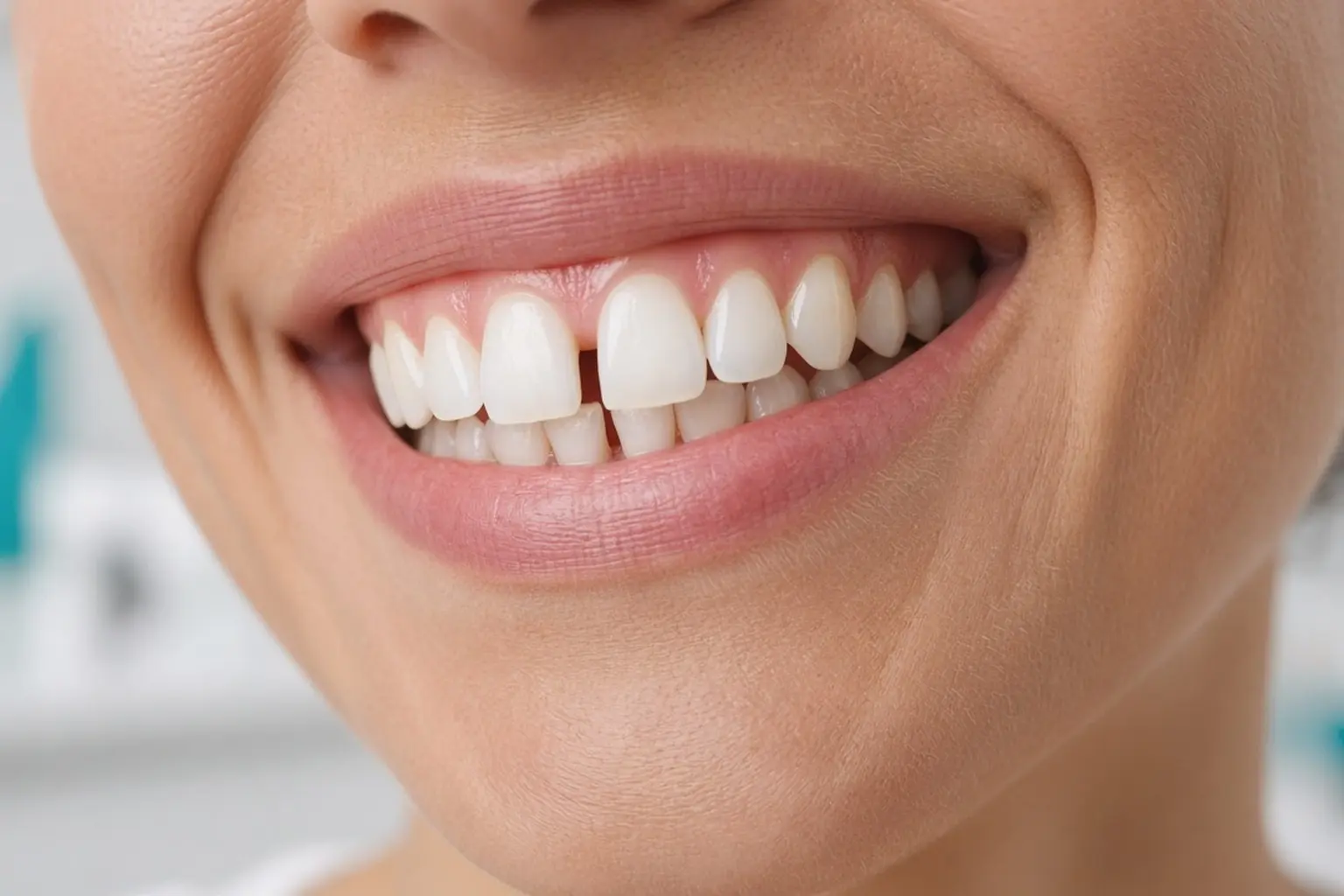
The canine is one of the most important teeth for the smile and the bite. Left inside the bone or under the gum, it can press on neighboring roots, crowd the arch, or leave a visible gap at the front of the mouth.

At Joele Clinics, Dr. Mohamed Ammar Al Jazaery, Orthodontic Consultant, explains that treatment is never one sentence. It depends on the canine’s location, its angle, the surrounding bone, the patient’s age, and why the tooth became impacted.

Video: Dr. Ammar explains the two paths

Source: short video on impacted canine treatment with Dr. Ammar Al Jazaery — Joele Clinics, Jeddah.

  • Treatment depends on position, angle, bone, age, and the cause of impaction.
  • First orthodontic choice: keep the natural tooth. Create space and pull the canine into its normal place.
  • Second option: extraction — only when we have no safer alternative.
  • A very steep angle or no space to bring the tooth down may change the plan.
  • Extracting the canine and placing an implant later is often difficult: bone grafting is commonly needed, and the plan becomes more complex and costly. That is why we avoid extracting the canine whenever traction is realistic.

What is an impacted canine?

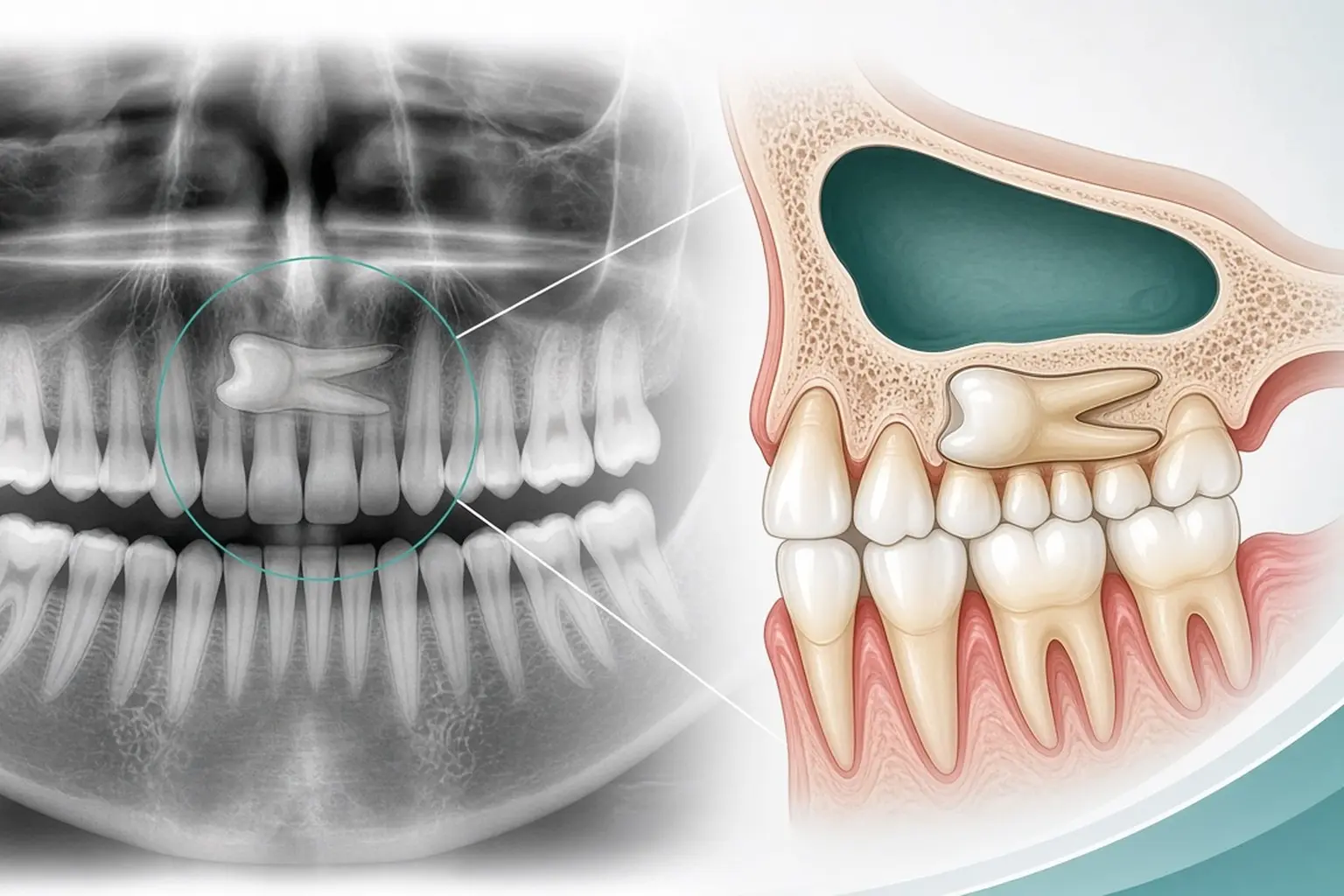
An impacted canine failed to erupt into its normal position on time and remains in bone or under the gum at an unfavorable angle.

It is most common in the upper canine — the tooth that frames the smile. After wisdom teeth, canines are the next most frequently impacted teeth, but they matter more for appearance and function: they support the lip, define the smile corner, and help guide the bite.

Without an early check, a baby canine may stay for years while a panoramic or 3D scan later shows the permanent canine lying above the front-tooth roots.

Why do canines become impacted?

Common findings in orthodontic clinics:

  • Lack of space from crowding or a small jaw.
  • A baby canine that overstays and blocks the path.
  • An eruption path that starts at the wrong angle.
  • Family history of canine impaction.
  • Small or missing lateral incisors, so the canine has no guide to follow.
  • A supernumerary tooth, cyst, or bony obstacle.

The cause changes the plan. A tooth blocked by crowding is not the same as a high-angled canine near the incisor roots.

Signs that deserve an orthodontic visit in Jeddah

Book an assessment if you notice:

  • A permanent canine clearly late compared with its pair, especially after ages 11–13.
  • A baby canine still firm in a teenager.
  • Unexplained tipping or protrusion of the front teeth.
  • A gap where the canine should be, with the baby tooth still present.
  • A bulge on the gum toward the lip or the palate.
  • Recurrent pressure or pain in the canine area.

The best screening window is often ages 8 to 12. A panoramic X-ray answers a lot; a CBCT scan maps the exact position, angle, and relationship to roots before any traction or extraction.

First choice: bring the canine into the arch

Dr. Ammar’s principle is simple: save the natural tooth when it is safe.

A typical plan includes:

  1. Clinical exam and imaging to locate the canine and measure its angle.
  2. Orthodontics to open the right amount of space.
  3. If needed, a small surgical exposure and an orthodontic attachment.
  4. Slow, controlled traction into the arch.
  5. Finishing the bite and smile, then a retainer.

A natural canine — with its long root and surrounding bone — is stronger, more aesthetic, and more stable long-term than an artificial replacement in this site.

When is extraction considered — and why we resist it

Extraction is not the default. It is considered when:

  • The angle is so steep that bringing the tooth down would endanger nearby roots.
  • There is no realistic space, and creating it would sacrifice other teeth without a clear gain.
  • The tooth is fused to bone (ankylosis) or the chance of successful traction is poor.
  • The canine itself is diseased (large cyst or severe resorption).

Even then, the decision follows accurate imaging and an honest comparison of traction versus extraction.

Why hold on to the canine? Because extracting it and implanting later is rarely a simple swap. The site often loses bone, grafting is frequently required, and cost and complexity rise. If traction can be done safely, that is the smarter first plan.

Does age change the decision?

  • Children and teens: the best chance for traction; bone responds more readily.
  • Young adults: traction is still possible in many cases, with a longer, more careful timeline.
  • Older patients or extreme angles: an alternative plan may be safer after a clear discussion of risks.

Earlier assessment means a higher chance of saving the tooth without extraction.

What to expect at Joele Clinics

A clear path, not surprises:

  • Consultation with Orthodontic Consultant Dr. Mohamed Ammar Al Jazaery.
  • The right imaging (panoramic and/or CBCT).
  • A visual plan: traction, monitoring, or — rarely — extraction.
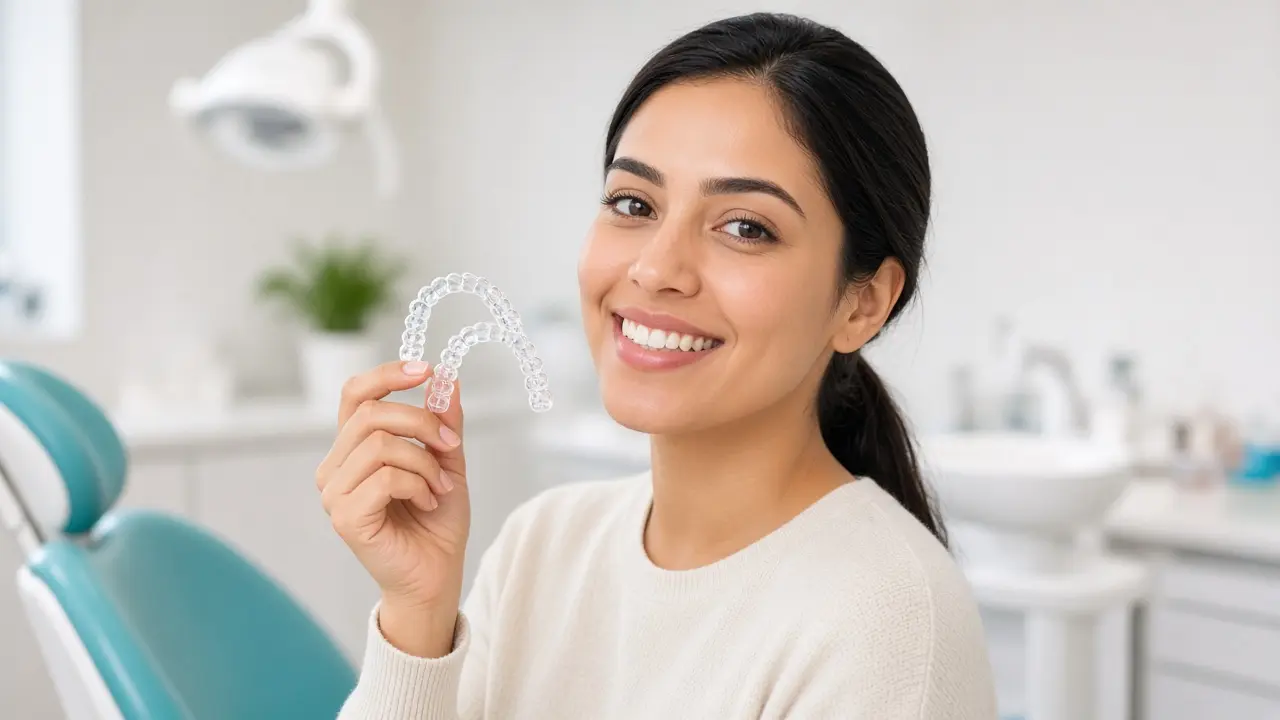
  • Braces or aligners according to the diagnosis, not preference alone.
  • Surgical coordination only if exposure or extraction assessment is needed.
  • Regular follow-up until the canine is stable in the arch.

Discomfort is usually temporary after activation or a small exposure, and settles within days with standard care.

Key takeaways

An impacted canine is not treated with “just take it out.” At Joele we start with one question: can we bring it into place safely? If yes, we pull it. If the angle, space, or age make that unsafe, we discuss extraction openly and without guesswork. Watch the video above, then book an assessment with Dr. Ammar Al Jazaery at Joele Clinics in Jeddah.

Add your Comment

Articles that may interest you

Book Now